6 Best Pacific Double Bass Drum Pedal Options for Every Drummer (2026)
Compare six pacific double bass drum pedal options, from budget-friendly single-chain models to direct-drive pedals, and find the right fit for your playing sty
 By Audrey Hayes
Updated November 21, 2026
 By Audrey Hayes
Updated November 2026
Choosing a pacific double bass drum pedal comes down to how you play, how fast you need to go, and how much feel you want under your foot. This list compares six pedals from the Pacific Drums and PDP by DW lineups, plus DW and Tama models that many drummers look at alongside them. Each pick is judged on drive system, footboard and beater design, build quality, and the kind of player it suits best, based on product listings, brand positioning, and common owner feedback.
Our top picks at a glance
- 1TOP CHOICEBest overallPacific Drums and Percussion 700 Series Double (Single Chain) Bass Drum Pedal (PDDP712)View on Amazon
- 2
 TOP CHOICEBest for fast double-kick workPDP By DW 800 Series (Double Chain) Bass Drum Pedal (PDDP812)View on Amazon
- 3
 TOP CHOICEBest for left-foot playersPDP BY DW 700 Series Left-Foot Double (Single Chain) Bass Drum Pedal (PDDP712L)View on Amazon
- 4
 Best for a direct, responsive feelPDP BY DW Concept Series Direct-Drive Double Bass Drum Pedal (PDDPCOD)View on Amazon
- 5
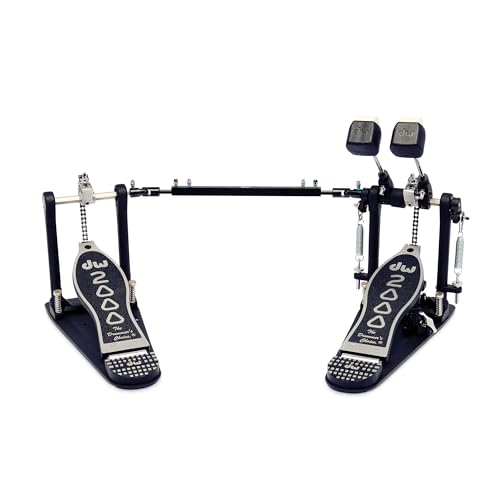 Best for a premium DW feelDW 2000 Series Double Bass PedalView on Amazon
- 6
 Best for a standard, dependable setupTama Standard Double-bass Drum PedalView on Amazon
Our Top Picks
Quick Comparison
| Product | Best for | Key feature |
|---|---|---|
| Pacific Drums and Percussion 700 Series Double (Single Chain) Bass Drum Pedal (PDDP712) | Overall value | Single-chain drive |
| PDP By DW 800 Series (Double Chain) Bass Drum Pedal (PDDP812) | Fast double-kick work | Double-chain drive |
| PDP BY DW 700 Series Left-Foot Double (Single Chain) Bass Drum Pedal (PDDP712L) | Left-foot players | Reversed left-foot layout |
| PDP BY DW Concept Series Direct-Drive Double Bass Drum Pedal (PDDPCOD) | Direct, responsive feel | Direct-drive mechanism |
| DW 2000 Series Double Bass Pedal | Premium DW feel | Upper-tier hardware |
| Tama Standard Double-bass Drum Pedal | Standard dependable setup | Simple, familiar design |
Pacific Drums and Percussion 700 Series Double (Single Chain) Bass Drum Pedal (PDDP712)
Pacific Drums and Percussion 700 Series Double (Single Chain) Bass Drum Pedal (PDDP712)
Best for: Overall value
This is a sensible starting point for drummers who want a true double pedal without stepping up to a high-end drive system. It suits intermediate players building a two-kick setup.
Pros
- Single-chain drive is simple to set up and maintain
- Familiar layout for players moving up from a single pedal
Cons
- Less immediate response than direct-drive designs at very high speeds
PDP By DW 800 Series (Double Chain) Bass Drum Pedal (PDDP812)
PDP By DW 800 Series (Double Chain) Bass Drum Pedal (PDDP812)
Best for: Fast double-kick work
Aimed at drummers who play fast, sustained double-kick patterns in metal, rock, and fusion. Owners often describe the chain system as stable under heavy use.
Pros
- Double-chain drive suits high-speed patterns
- Solid, stable feel under repeated hard playing
Cons
- Heavier feel than lighter single-chain models
PDP BY DW 700 Series Left-Foot Double (Single Chain) Bass Drum Pedal (PDDP712L)
PDP BY DW 700 Series Left-Foot Double (Single Chain) Bass Drum Pedal (PDDP712L)
Best for: Left-foot players
Designed for drummers who lead with the left foot, this pedal mirrors the standard layout. It is a practical option for left-handed kits or unconventional setups.
Pros
- Reversed layout matches left-foot technique
- Same single-chain simplicity as the right-foot 700 Series
Cons
- Limited appeal if you play with a standard right-foot lead
PDP BY DW Concept Series Direct-Drive Double Bass Drum Pedal (PDDPCOD)
PDP BY DW Concept Series Direct-Drive Double Bass Drum Pedal (PDDPCOD)
Best for: Direct, responsive feel
Suited to drummers who want a quick, connected response from the footboard to the beater. Direct-drive designs remove some of the linkage found in chain systems.
Pros
- Direct-drive mechanism gives a fast, connected feel
- Good match for light, precise playing
Cons
- Feel takes some adjustment if you are used to chain drives
DW 2000 Series Double Bass Pedal
DW 2000 Series Double Bass Pedal
Best for: Premium DW feel
A step up for drummers who want DW-level hardware and a refined footboard. It fits players who expect long-term durability and fine-tuned adjustments.
Pros
- Upper-tier hardware and build quality
- Smooth, refined feel favored by experienced players
Cons
- Sits at the higher end of the lineup, so it is less of a budget choice
Buying Guide
Drive System: Single Chain vs. Double Chain vs. Direct Drive
Single-chain pedals are usually lighter and simpler, which makes them a comfortable choice for players who mostly play single strokes or moderate double-kick patterns. Double-chain designs add a second chain for more power and a sturdier feel, which many drummers prefer for heavier playing. Direct-drive pedals remove the chain entirely, creating a very immediate connection between your foot and the beater.
If you are unsure, start by thinking about the type of music you play most often. Rock and metal players who lean on heavy kick patterns may gravitate toward double chain, while jazz, pop, and lighter genres often feel right on a single chain.
Footboard and Pedal Feel
The footboard is where you make the most direct contact with the pedal, so its size, angle, and surface matter a lot. Some players want a larger, flatter board for a stable platform, while others prefer a narrower footboard that lets them pivot the foot more freely. Adjustable footboard angles and spring tension are useful features to look for because they let you fine-tune the response.
Try to sit at a kit and move your foot through a few strokes before deciding. Comfort over long sessions matters just as much as raw speed.
Beater Type and Tone
Beater choice affects both attack and tone. Wood beaters tend to produce a warmer, rounder sound, while plastic and felt options give a sharper click that cuts through a mix. Many pedals let you swap beaters, so you can experiment as your style changes.
Consider the head combination on your bass drum as well. A heavily muffled head may pair well with a softer beater, while a more open head can benefit from a firmer striking surface.
Build Quality and Hardware
Look at the frame, hinge points, and hardware finish. Pedals with solid construction and well-machined parts generally hold their adjustments better and stand up to frequent gigging or rehearsal. Pay attention to the clamp and how securely the pedal attaches to your bass drum hoop, since a loose fit can shift during play.
Pedals in the professional tiers of each lineup typically use more robust components, while entry-level models focus on value and essential function.
Your Playing Style and Experience Level
Beginners often do well with a pedal that is forgiving and easy to adjust, since it lets them build technique without fighting the hardware. Intermediate and advanced drummers usually want more precise control, faster response, and options for customizing the setup. Matching the pedal to your current skill level and your goals will make the choice much easier than chasing the most expensive model.
FAQ
Is a double bass drum pedal hard to learn?
It takes practice, but most drummers can get comfortable with a double pedal within a few weeks of regular work. Starting slowly and focusing on even, controlled strokes will build speed more reliably than rushing. A pedal with easy adjustments can also make the learning curve feel smoother.
What is the main difference between a single chain and double chain pedal?
A single-chain pedal uses one chain to transfer motion from the footboard to the beater, which keeps the setup lighter and simpler. A double-chain pedal uses two chains, which generally adds stability and a more powerful feel. The better choice depends on how heavily you play and how much you value a lighter or sturdier response.
Do I need a left-foot pedal?
Only if you are a left-footed player or prefer to set up your kit with the second pedal on the left side. Left-foot models are designed to mirror the standard layout, which can feel more natural for some drummers. Most players who are right-footed can use a standard right-side pedal without any issue.
Can I use a double pedal on any bass drum?
Most double pedals fit standard bass drum hoops, but you should check clamp size and hoop thickness before buying. A secure fit matters for stability, so confirm compatibility with your drum’s hardware. If you are unsure, a quick measurement or a conversation with your local drum shop can save time. If you want more background, see 6 Best Millenium The Strike Double Bass Pedal Options for Drummers (2026).
Should I replace my beater right away?
You do not have to, since the included beater works for most players when they are starting out. Trying a different beater later can help you find the tone and feel you want. Changing beaters is usually inexpensive and one of the easiest ways to customize your sound.
Conclusion
For most drummers looking for a reliable, versatile option, the Pacific 700 Series single-chain pedal is a solid place to start, especially for players who value a balanced feel. Those who play faster, heavier material or want a more powerful setup should look at the PDP 800 Series double-chain model. Drummers with specific needs, such as left-footed players or those seeking a direct-drive response, will find that the left-foot 700 Series and the Concept Series direct-drive pedal cover those niches well.
If you prefer the DW or Tama feel, the DW 2000 Series and Tama Standard are worth comparing against the Pacific options. Try a few in person when possible, since footboard comfort and pedal response are very personal, and the right choice is the one that feels best under your foot.
Related reading
- Who Invented the Double Bass Drum Pedal? A Short History
- Used Double Bass Drum Pedal: What to Check Before You Buy
- Single Vs. Double Bass Drum Pedal Spring Tension: Which Is Better?
- Pearl P532 Double Bass Drum Pedal: Setup, Adjustment and Buying Tips
- Pearl Drum Double Bass Pedal: A Buyer's and Setup Guide
About Audrey Hayes
Audrey Hayes is part of our editorial team and reviews and edits our drums guides, checking product details against manufacturer specifications and owner feedback.
About the author
Audrey Hayes writes reviews and buying guides for Drum Path.