Remo Silentstroke Drum Heads: 6 Best Picks for Quiet Practice (2026)
Compare the best remo silentstroke drum heads for quiet practice. See sizes, sound traits and who each model suits before you buy.
 By Owen Palmer
Updated November 9, 2026
 By Owen Palmer
Updated November 2026
Choosing among remo silentstroke drum heads comes down to a few practical questions: which drum you need to quiet, how much rebound you want under the stick, and whether you play in a shared space where neighbors notice every stroke. This list groups six Silentstroke options by drum size and use case. Each pick was assessed using manufacturer specifications, the brand’s reputation for practice-focused heads, and the patterns owners commonly report about feel, volume reduction and durability. No single head is right for every kit, so the comparison below is meant to help you match a size to the drum you actually want to deaden.
Our top picks at a glance
- 1TOP CHOICEBest overallRemo Silentstroke Drumhead, 12"View on Amazon
- 2TOP CHOICEBest for small kitchensRemo Silentstroke Drumhead, 8"View on Amazon
- 3TOP CHOICEBest for a mid-size tomRemo Silentstroke Drumhead, 10"View on Amazon
- 4Best for bass drum practiceRemo Silentstroke Bass Drumhead, 24"View on Amazon
- 5Best for a floor tomRemo Silentstroke Drumhead, 15"View on Amazon
- 6
 Best budget pick (multi-size pack)Remo PP-1470-PS Pinstripe Clear Tom Drumhead Pack – 10", 12" & 16"View on Amazon
Our Top Picks
Quick Comparison
| Product | Best for | Key feature |
|---|---|---|
| Remo Silentstroke Drumhead, 12″ | Overall practice on a standard rack tom | Silent-style dampened top for reduced stick noise |
| Remo Silentstroke Drumhead, 8″ | Small kitchens and compact setups | Compact size that suits high rack toms |
| Remo Silentstroke Drumhead, 10″ | Mid-size toms in home studios | Balanced volume reduction at a common tom size |
| Remo Silentstroke Bass Drumhead, 24″ | Bass drum practice without a full kick | Dampened bass head for quieter kick work |
| Remo Silentstroke Drumhead, 15″ | Floor toms and larger drums | Larger head for a deeper, quieter floor tom |
| Remo PP-1470-PS Pinstripe Clear Tom Drumhead Pack – 10″, 12″ & 16″ | Drummers who want several sizes at once | Multi-size pack covering three common tom diameters |
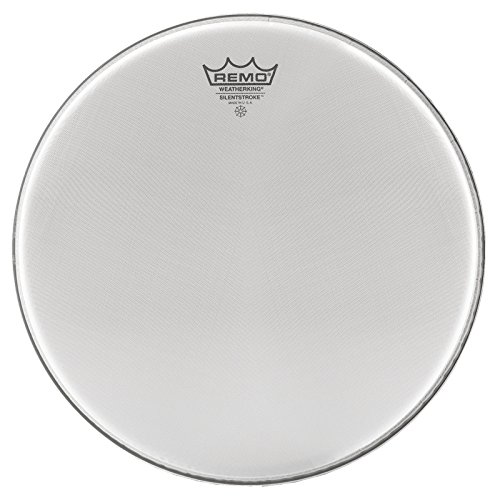
Remo Silentstroke Drumhead, 12″
Remo Silentstroke Drumhead, 12"
Best for: Overall practice on a standard rack tom
This is the size many drummers reach for first. It fits the most common rack tom diameters and gives a good balance of rebound and volume reduction for daily practice in apartments or shared rooms.
Key specs
- Diameter: 12 inches
- Designed as a Silentstroke practice head with a dampened top
- Sold as a single head
Pros
- Fits common rack tom sizes
- Noticeably quieter than an unmodified head at practice volume
- Rebound feels closer to a standard head than heavier mutes
Cons
- Stick feel is firmer than some drummers expect
- Does not reduce low-frequency resonance as much as a full mute
Bottom line: A strong default choice for drummers who want one head that balances quiet practice with a playable feel.
View on AmazonRemo Silentstroke Drumhead, 8″
Remo Silentstroke Drumhead, 8"
Best for: Small kitchens and compact setups
Smaller toms are often used in tight spaces, and a 8-inch Silentstroke suits those kits. It is aimed at drummers who need the smallest footprint and the quietest small-drum sound.
Key specs
- Diameter: 8 inches
- Silentstroke dampened practice head
- Single head
Pros
- Matches compact high toms and practice kits
- Reduces stick noise on small drums
- Easy to fit on a small rack setup
Cons
- Limited use outside small-tom setups
- Tonal range is narrower than larger sizes
Bottom line: Best for drummers with a compact kit who want a quiet small tom.
View on AmazonRemo Silentstroke Drumhead, 10″
Remo Silentstroke Drumhead, 10"
Best for: Mid-size toms in home studios
A 10-inch head sits between the compact and standard sizes. It works well for drummers who run a mid-size rack tom and want a quieter sound without going to a heavy mute.
Key specs
- Diameter: 10 inches
- Silentstroke dampened practice head
- Single head
Pros
- Good match for common mid-size toms
- Reduces volume without a heavy feel
- Useful for home studios with recording
Cons
- Requires confirming your tom’s diameter first
- Less dramatic volume drop than a full practice pad setup
Bottom line: A practical choice for home drummers with a 10-inch tom who want quieter practice.
View on AmazonRemo Silentstroke Bass Drumhead, 24″
Remo Silentstroke Bass Drumhead, 24"
Best for: Bass drum practice without a full kick
Bass drums are the loudest part of most kits. This 24-inch Silentstroke bass head is designed for drummers who want to work on kick technique at lower volume while keeping a realistic feel under the beater.
Key specs
- Diameter: 24 inches
- Bass drum practice head with dampened resonance
- Single head
Pros
- Cuts the most volume of the bass drum options here
- Useful for quiet kick practice in shared spaces
- Maintains a playable feel for double-bass work
Cons
- Changes the bass drum’s tone noticeably
- Only useful if your kick is a 24-inch model
Bottom line: Ideal for drummers with a 24-inch kick who need to practice quietly.
View on AmazonRemo Silentstroke Drumhead, 15″
Remo Silentstroke Drumhead, 15"
Best for: Floor toms and larger drums
A 15-inch head fits floor toms, where sound travels lower and further. It suits drummers who want to dampen a larger drum without losing the body of the sound.
Key specs
- Diameter: 15 inches
- Silentstroke dampened practice head
- Single head
Pros
- Matches common floor tom diameters
- Keeps some low-end body while cutting stick noise
- Practical for quiet practice on larger drums
Cons
- Floor toms still resonate through the stand
- Less useful if your kit has no floor tom
Bottom line: A good fit for drummers who want their floor tom quieter but still full-sounding.
View on AmazonRemo PP-1470-PS Pinstripe Clear Tom Drumhead Pack – 10″, 12″ & 16″
Remo PP-1470-PS Pinstripe Clear Tom Drumhead Pack – 10", 12" & 16"
Best for: Drummers who want several sizes at once
This pack is a different category: a set of clear pinstripe tom heads in three common diameters rather than a Silentstroke practice head. It is included here for drummers who want to cover multiple tom sizes in one purchase while comparing against the Silentstroke options.
Key specs
- Sizes: 10″, 12″ and 16″
- Clear pinstripe tom heads
- Pack of three heads
Pros
- Covers three common tom sizes
- Useful for replacing several toms at once
- Good reference point against dampened heads
Cons
- Not a Silentstroke head, so it will not reduce stick noise the same way
- Only worth buying if you need all three sizes
Bottom line: Best for drummers replacing several toms who do not need the quiet-practice feature.
View on AmazonBuying Guide
Match the head to your drum diameter
Measure the batter-side diameter of the drum before ordering. Common tom sizes are 8, 10, 12, 13, 14 and 15 inches, and a head that is even slightly off will not seat properly on the hoop. Confirm the size in the drum’s specifications or by measuring across the shell from inside the bearing edges.
Good picks for this: Remo Silentstroke Drumhead, 12″; Remo Silentstroke Drumhead, 10″
Understand the Silentstroke dampening
Silentstroke heads use a dampened top to reduce stick noise and overtone ring. The effect is strongest at lower stick velocities. If you play hard, expect the volume reduction to be less dramatic. Test a head at your normal dynamics before you rely on it for practice.
Good picks for this: Remo Silentstroke Drumhead, 8″; Remo Silentstroke Drumhead, 15″
Consider rebound and stick feel
Dampened heads generally feel firmer and rebound a little differently than an untreated head. Some drummers prefer that feel for technique work because it encourages a controlled stroke. Others find it less responsive. Playing a head in a shop or borrowing a similar head is the most reliable way to judge feel.
Good picks for this: Remo Silentstroke Drumhead, 12″; Remo Silentstroke Drumhead, 10″
Bass drum heads need a different approach
Bass drum heads are larger and carry more low-frequency energy, so the amount of dampening matters more. A bass head that is too heavily treated can feel dead under the beater. Check whether your kick is a 22-inch or 24-inch model before choosing a head.
Good picks for this: Remo Silentstroke Bass Drumhead, 24″
Think about your use case
Quiet practice, recording, and gigging all need different things. A dampened head helps with practice and home recording, where stick noise and ring can interfere with the mix. For stage use, most drummers prefer a head with more open resonance, so a practice head may not be the right long-term choice.
Good picks for this: Remo PP-1470-PS Pinstripe Clear Tom Drumhead Pack – 10″, 12″ & 16″; Remo Silentstroke Drumhead, 10″
Durability and wear
Drumheads wear at the point of contact and around the hoop edge. Rotate your heads periodically and check for dents, dead spots or a loss of tuning stability. Replace a head when it no longer holds pitch or develops visible damage at the playing area.
Good picks for this: Remo Silentstroke Drumhead, 15″; Remo PP-1470-PS Pinstripe Clear Tom Drumhead Pack – 10″, 12″ & 16″
Care and tuning
Keep heads clean and avoid touching the playing surface with oily hands. Tune in small increments and check each lug after adjusting. Loosening a head fully before changing it prevents hoop damage. For detailed setup, see the guide to drum tuning on related reading.
Good picks for this: Remo Silentstroke Drumhead, 12″; Remo Silentstroke Bass Drumhead, 24″
FAQ
What size Silentstroke head should I buy for my tom?
Measure the batter-side diameter of the drum and buy the matching size. Common options are 8, 10, 12 and 15 inches for toms, and 24 inches for most bass drums. A mismatched size will not seat correctly.
Do Silentstroke heads eliminate drum sound completely?
No. They reduce stick noise and overtone ring, but the drum still produces audible sound. Their purpose is quieter practice, not silence.
Can I use a Silentstroke head on a bass drum?
Yes, if you buy the bass-drum version sized for your kick. Bass heads are built differently from tom heads because they carry more low-frequency energy.
Do dampened heads affect the feel of my playing?
Many drummers notice a firmer or different rebound compared with an untreated head. The difference is subjective, so test the feel at your normal dynamics where possible.
How often should I replace a practice head?
Replace a head when it loses tuning stability, develops dents or dead spots, or shows visible wear at the playing area. Heavy daily use wears heads faster than occasional practice.
Is a multi-size pack a better value than single heads?
It depends on your kit. A pack makes sense if you need several toms replaced at once. If you only need one size, a single head avoids buying sizes you will not use.
Do I need to re-tune after changing a head?
Yes. A new head changes the tuning, so bring it up to pitch evenly around the hoop and check the lugs after a few sessions.
Conclusion
For most drummers, the 12-inch Silentstroke is the most practical starting point, because it fits a common rack tom and balances quiet practice with a playable feel. Smaller kits benefit from the 8-inch head, mid-size toms suit the 10-inch, floor toms work with the 15-inch, and bass drummers with a 24-inch kick should look at the bass-specific model. The multi-size pack is a reference option for drummers replacing several toms, but it is not a Silentstroke head. Match the size to your drum first, then decide how much dampening you need for your practice space.
Sources
- Workplace noise exposure guidance and hearing-protection basics relevant to loud practice (osha.gov)
- Information on noise-induced hearing loss and safe listening levels (cdc.gov)
Related reading
- Yamaha Beginner Drum Set: 7 Things to Check Before You Buy (2026)
- Yamaha Bass Drum Pedal: A Setup and Buying Guide for Drummers
- Yamaha Acoustic Drum Kit Review (2026)
- Why Does My Bass Drum Pedal Spring Tension Feel Wrong? Causes and Fixes
- What Is a Dualist Bass Drum Pedal? How It Works and Who Needs One
- Trick Bass Drum Pedal Picks: 7 Best Options for Drummers (2026)
About Owen Palmer
Owen Palmer is part of our editorial team and reviews and edits our drums guides, checking product details against manufacturer specifications and owner feedback.
About the author
Owen Palmer writes reviews and buying guides for Drum Path.