3 Best Custom Made Bass Drum Heads for Every Drummer (2026)
Find the best custom made bass drum heads for your kit. We compare three Evans options by sound, damping, and fit to help you choose the right kick drum head.
 By Owen Palmer
Updated November 23, 2026
 By Owen Palmer
Updated November 2026
Custom made bass drum heads let you match your kick drum to the sound, look, and playing style you want, but the choice is more involved than picking a design. Drummers usually need to weigh resonance, attack, damping, and size against their kit and genre. This guide compares three Evans bass drum heads that serve different needs, using specifications, brand reputation, and common owner feedback as the basis for our picks. Before you buy, it helps to understand what custom made bass drum heads are typically built from, since material shapes tone as much as any graphic.
Our top picks at a glance
- 1TOP CHOICEBest overallEvans EMAD2 Clear Bass Drum Head, 22”View on Amazon
- 2
 Best for focused low endEvans EQ3 Resonant Black Bass Drumhead 20 InchView on Amazon
- 3
 Best for adjustable sustainEvans REMAD Resonant Bass Drum Head, 24 InchView on Amazon
Our Top Picks
| Product | Best for | Key feature |
|---|---|---|
| Evans EMAD2 Clear Bass Drum Head, 22” | Drummers who want adjustable attack and focus | Externally mounted adjustable damping system with two foam rings |
| Evans EQ3 Resonant Black Bass Drumhead 20 Inch | Players who want a tight, controlled kick in a smaller shell | Resonant design for focused low end and controlled sustain |
| Evans REMAD Resonant Bass Drum Head, 24 Inch | Drummers who want full kick tone with adjustable damping | Resonant head with adjustable damping for sustain control |
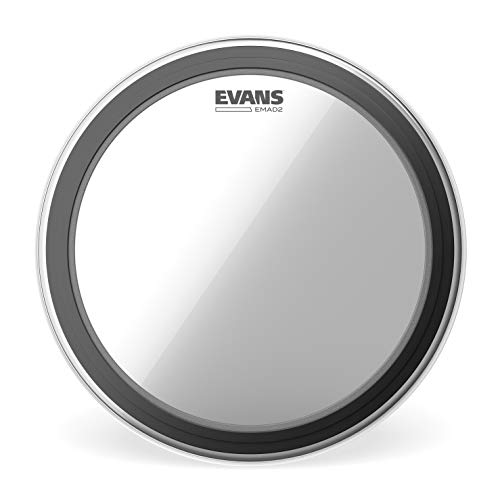
Evans EMAD2 Clear Bass Drum Head, 22”
Evans EMAD2 Clear Bass Drum Head, 22” – Externally Mounted Adjustable Damping System Allows Player to Adjust Attack and Focus – 2 Foam Damping Rings for Sound Options – Versatile for All Music Genres
Best for: Adjustable attack and focus across music styles
This head suits drummers who play a range of genres and want to dial in the kick without changing heads. Its externally mounted damping system lets you adjust how much the head rings, which makes it a flexible option for studio and live work alike.
Key specs
- Size: 22 inches
- Clear single-ply batter design
- Externally mounted adjustable damping system
- Includes two foam damping rings for sound options
Pros
- Damping can be adjusted without tools inside the drum
- Versatile across rock, pop, jazz, and fusion
- Foam rings offer a simple way to change the sound
Cons
- External damping hardware adds a visible element some drummers dislike
- Clear finish shows wear and fingerprints over time
Bottom line: A strong pick for drummers who want one head that adapts to different music and room sizes.
View on AmazonEvans EQ3 Resonant Black Bass Drumhead 20 Inch
Evans EQ3 Resonant Black Bass Drumhead 20 Inch | Evans EQ3 resonant bass heads deliver focused low end, controlled sustain, rich tone and stage-ready kick drum performance.
Best for: Focused low end in a tighter kick sound
This resonant head is aimed at drummers who want a defined, punchy kick with controlled sustain. Its black finish also suits kits where a clean, low-profile look matters.
Key specs
- Size: 20 inches
- Resonant black design
- Built for focused low end and controlled sustain
Pros
- Tight, focused low end suited to modern rock and metal
- Controlled sustain keeps the kick from blurring in dense mixes
- Black finish gives a clean, understated look
Cons
- Less sustain than fuller-ringing heads, which some players want for open tones
- Size is limited to 20 inches, so it fits only matching shells
Bottom line: Best for players with a 20-inch kick who want precise, controlled low end.
View on AmazonEvans REMAD Resonant Bass Drum Head, 24 Inch
Evans REMAD Resonant Bass Drum Head, 24 Inch | Evans REMAD resonant bass drum heads deliver controlled sustain, focused low end, adjustable damping and full kick tone.
Best for: Full kick tone with adjustable sustain
This 24-inch resonant head targets drummers who want a big, full kick with the option to shape how long it rings. It fits larger shells common in rock and fusion setups.
Key specs
- Size: 24 inches
- Resonant design with adjustable damping
- Designed for controlled sustain and full kick tone
Pros
- Full, rich tone suited to larger shells
- Adjustable damping gives control over sustain
- Works well across rock, fusion, and worship settings
Cons
- Larger diameter may not suit compact or shallow kits
- Full resonance can need more damping for tight genres
Bottom line: A good fit for drummers with a 24-inch kick who want full tone with room to adjust sustain.
View on AmazonBuying Guide
Head Material and Construction
Most bass drum heads are built from polyester film or coated Mylar, and the thickness and coating affect attack, durability, and how the head responds to a beater. Thicker single-ply heads tend to sound more focused, while thinner ones ring longer. Learning what bass drum heads are made of helps you predict how a custom design will sound before you commit.
Good picks for this: Evans EMAD2 Clear Bass Drum Head, 22”; Evans EQ3 Resonant Black Bass Drumhead 20 Inch
Size and Shell Fit
Bass drum heads come in standard diameters such as 18, 20, 22, and 24 inches. Measure the batter and resonant sizes of your shell rather than relying on the kit name, since the nominal size and actual measurement can differ slightly. A head that is even a fraction off can seat poorly and affect tuning.
Good picks for this: Evans EQ3 Resonant Black Bass Drumhead 20 Inch; Evans REMAD Resonant Bass Drum Head, 24 Inch
Resonant vs Batter Heads
Resonant heads sit on the non-playing side of the drum and shape how the kick projects and sustains. Batter heads face the beater and handle the attack. Check which side you need to replace, and whether the head is designed for that position, before ordering.
Good picks for this: Evans REMAD Resonant Bass Drum Head, 24 Inch; Evans EQ3 Resonant Black Bass Drumhead 20 Inch
Damping and Sustain Control
Damping reduces unwanted ring and tightens the kick. External damping systems let you adjust sustain without opening the drum, while foam rings or pillows offer a simpler, cheaper approach. Start with light damping and adjust in small steps until the kick matches your music.
Good picks for this: Evans EMAD2 Clear Bass Drum Head, 22”; Evans REMAD Resonant Bass Drum Head, 24 Inch
Playing Style and Genre
Open, ringing kicks suit jazz and some rock, while tight, punchy kicks suit metal and modern pop. Match the head to your typical setlist rather than a single song. If you play several styles, choose a head with adjustable damping so you can change the sound between gigs.
Good picks for this: Evans EMAD2 Clear Bass Drum Head, 22”; Evans EQ3 Resonant Black Bass Drumhead 20 Inch
Durability and Care
Heads wear from beater contact, humidity, and tuning changes. Keep spare heads on hand for gigs, and inspect the surface for dents or stretched spots. Clear and printed finishes can show fingerprints and scuffs, so handle the head by its edges during installation.
Good picks for this: Evans EMAD2 Clear Bass Drum Head, 22”; Evans REMAD Resonant Bass Drum Head, 24 Inch
Custom Graphics and Finish
Custom graphics are printed on the batter side and can affect how the head feels under the beater. Printed areas may slightly alter attack, and some finishes fade over time with light exposure. Ask about print durability before ordering a fully custom design.
Good picks for this: Evans EQ3 Resonant Black Bass Drumhead 20 Inch; Evans EMAD2 Clear Bass Drum Head, 22”
FAQ
What size bass drum head do I need?
Measure the diameter of the batter and resonant sides of your shell, not just the nominal size on the kit. Standard options include 18, 20, 22, and 24 inches, and the head must match the shell to seat correctly.
What is the difference between a resonant and a batter head?
The batter head is the playing head that faces the beater. The resonant head is on the opposite side and shapes projection and sustain. Some kits use a resonant head on the front as well, which changes the tone.
Does damping change the sound of a kick drum?
Yes. Damping reduces sustain and can tighten the attack. External damping systems and foam rings let you change the sound without reshelling the drum, so test a few settings before a session or gig.
How often should I replace a bass drum head?
There is no fixed schedule. Replace a head when it shows dents, stretching, or dead spots, or when it no longer holds tuning. Heavy playing and gigging tend to wear heads faster than casual practice.
Can I print a custom design on a bass drum head?
Many manufacturers offer custom printing, but the design can affect how the head feels under the beater. Confirm the print process and finish durability with the maker before ordering.
Are resonant heads necessary?
They are not required, but a resonant head influences projection and sustain. Many drummers use one to fill out the low end, while others run without it for a dry, punchy kick.
Conclusion
For a flexible head that adapts to several genres, the Evans EMAD2 Clear Bass Drum Head, 22” is a sensible starting point, since its adjustable damping covers a wide range of sounds. Drummers with a 20-inch kick who want focused, controlled low end should look at the Evans EQ3 Resonant Black Bass Drumhead 20 Inch. For a 24-inch shell that needs full tone with adjustable sustain, the Evans REMAD Resonant Bass Drum Head, 24 Inch fits that role. Match the diameter to your shell first, then choose based on the sound you want.
Sources
- Consumer safety guidance on product labeling and handling of musical equipment (cpsc.gov)
- Research resources on acoustics and how percussion instruments produce sound
Related reading
- What Are Bass Drum Heads Made Of? Materials Explained for Drummers
- Custom Logo Bass Drum Heads: 3 Best Picks for Every Kit (2026)
- Custom Bass Drum Heads Canada (2026): Printed vs Clear Custom Heads Compared
- 6 Best Remo Custom Bass Drum Heads for Every Drummer (2026)
- 5 Best Printed Bass Drum Heads for Custom Looks (2026)
About Owen Palmer
Owen Palmer is part of our editorial team and reviews and edits our drums guides, checking product details against manufacturer specifications and owner feedback.
About the author
Owen Palmer writes reviews and buying guides for Drum Path.