5 Best Heavy Duty Cymbal Boom Stand Picks for Every Drummer (2026)
Looking for a heavy duty cymbal boom stand that holds heavy crashes and rides steady? Compare five picks by stability, adjustability and fit.
 By Audrey Hayes
Updated November 21, 2026
 By Audrey Hayes
Updated November 2026
Finding a heavy duty cymbal boom stand comes down to three things: how much weight the arm and base can handle, how well the boom holds its position under a hard strike, and how easily the height and angle can be adjusted. This list weighs those criteria using manufacturer specifications, brand reputation and common owner feedback about wobble, slippage and hardware durability. No product here was tested in a lab or by the author.
Our top picks at a glance
- 1TOP CHOICEBest overallSeteol Heavy Duty Boom/Straight 2-in-1 Convertible Cymbal StandView on Amazon
- 2
 TOP CHOICEBest for a classic straight-to-boom setupDW 3000 Series Straight Boom Cymbal Stand (DWCP3700A)View on Amazon
- 3
 TOP CHOICEBest for tight, compact kitsBoom Cymbal Stand, Lightweight Double Braced Chrome (4709)View on Amazon
- 4
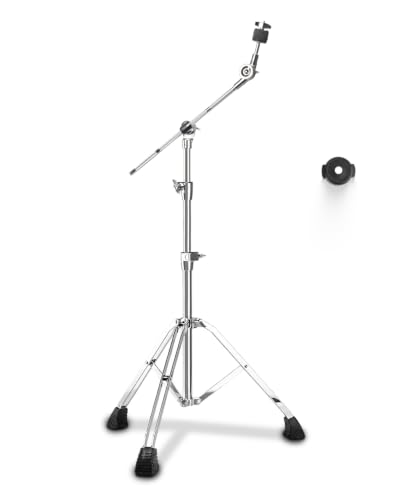 Best for tall setups and wide height rangeHeavy-Duty Cymbal Boom Stand, 32–69 in Adjustable TripodView on Amazon
- 5
 Best for multiple cymbals on one standSeteol Boom Cymbal Stand (1 Pack) with L-Arm ExtensionView on Amazon
Our Top Picks
Quick Comparison
| Product | Best for | Key feature |
|---|---|---|
| Seteol Heavy Duty Boom/Straight 2-in-1 Convertible Cymbal Stand | Heavy crash and ride cymbals | Convertible boom or straight use |
| DW 3000 Series Straight Boom Cymbal Stand | Classic straight-to-boom setups | Established brand build |
| Boom Cymbal Stand, Lightweight Double Braced Chrome (4709) | Compact kits and tight spaces | Hideaway boom tilter |
| Heavy-Duty Cymbal Boom Stand, 32–69 in Tripod | Tall setups and wide height range | Double-braced tripod base |
| Seteol Boom Cymbal Stand (1 Pack) with L-Arm | Mounting extra cymbals | Extension arm attachment |
Seteol Heavy Duty Boom/Straight 2-in-1 Convertible Cymbal Stand
Seteol Heavy Duty Boom/Straight 2-in-1 Convertible Cymbal Stand | Upgraded Height Adjustable Drum Hardware with Double Braced Legs for Heavy Ride, Crash and Splash Cymbals
Best for: Heavy crash and ride cymbals
This suits drummers who want one stand that can switch between boom and straight configurations as the kit changes. Its double-braced legs are the main selling point for heavier cymbals.
Pros
- Convertible between boom and straight modes
- Double-braced legs for added stability
Cons
- Setup takes more time than a single-purpose stand
DW 3000 Series Straight Boom Cymbal Stand (DWCP3700A)
DW 3000 Series Straight Boom Cymbal Stand (DWCP3700A)
Best for: Classic straight-to-boom setups
Drummers who already own DW hardware or want a well-known brand with a familiar feel will find this a straightforward choice.
Pros
- Established brand with broad owner familiarity
- Simple, predictable setup
Cons
- Fewer convertible options than some alternatives
Boom Cymbal Stand, Lightweight Double Braced Chrome (4709)
Boom Cymbal Stand, Lightweight Double Braced Chrome Drum Hardware (4709) | Cymbal Stand with Hideaway Boom Tilter and Geared Cymbal Adjustment, Hinged Height Control for Drum Sets and Percussion Kits
Best for: Compact kits and tight spaces
This fits drummers in small rooms or on smaller kits who want a lighter footprint without giving up the geared height and angle adjustments.
Pros
- Hideaway boom tilter saves space
- Geared cymbal adjustment for fine positioning
Cons
- Lighter build may feel less planted under very heavy cymbals
Heavy-Duty Cymbal Boom Stand, 32–69 in Adjustable Tripod
Heavy-Duty Cymbal Boom Stand,32-69 in Adjustable Double-Braced Tripod Stand | Cymbal Boom Stand for Drum Hardware Percussion,Compatible with various cymbals/Crash/Ride/Splash/Bell/China CS-200
Best for: Tall setups and wide height range
Drummers who sit at different heights, share a kit, or need a very high crash will benefit from the listed 32 to 69 inch range.
Pros
- Wide adjustable height range
- Double-braced tripod base
Cons
- Tall extension can reduce stability if not tightened fully
Seteol Boom Cymbal Stand (1 Pack) with L-Arm Extension
Seteol Boom Cymbal Stand for Mounting Crash, Ride, Splash Cymbals (1 Pack) | Adjustable 2-in-1 Straight Boom Cymbal Stand, L-Arm Rod with Bracket Holder Extension Arm Attachment
Best for: Mounting extra cymbals
This works for drummers who want a second cymbal positioned off the same stand without buying a separate base.
Pros
- L-arm extension adds mounting options
- Adjustable 2-in-1 straight and boom design
Cons
- Extra arm adds weight and can affect balance
Buying Guide
Load Capacity and Arm Weight
Check the manufacturer’s stated weight rating for the cymbal you plan to mount. Heavier crash and ride cymbals put more leverage on the arm, so a stand built for light cymbals can bend or drift over time.
Base Design and Bracing
Double-braced legs or a tripod base spread the load more evenly than a single leg. A wider footprint usually means less wobble when you strike hard.
Height and Angle Adjustment
Look for locking clutches or geared adjustments that hold position under repeated hits. A wide height range helps if you share a kit or change seating height.
FAQ
What makes a cymbal boom stand heavy duty?
A heavy duty cymbal boom stand typically has a thicker, more rigid arm, a wider or double-braced base, and clamps that hold their position under repeated hard strikes. Load capacity and base stability matter more than height range when you play loud cymbals like large crashes or heavy rides.
Is a straight boom stand better than a boom stand with a tilter?
A straight boom stand is simpler, usually sturdier, and keeps the cymbal in one plane, which suits drummers who want minimal moving parts. A boom with a tilter or geared adjustment gives more angle control, which helps when you need to position cymbals precisely around a crowded kit.
Can I use a cymbal boom stand for percussion or bells?
Yes, many boom stands are designed to hold a range of cymbal types, including crash, ride, splash, bell and china cymbals. Check that the cymbal’s clamp or felt fits the stand’s arm size before buying, and be sure the total weight stays within the stand’s stated capacity.
How do I stop a boom stand from slipping or drooping?
Tighten all wing nuts and clutch fittings firmly after each adjustment, and make sure the base legs are fully extended and locked. Placing the stand on a flat, solid surface and using felt or rubber washers at the clamp points also helps reduce slippage.
Do I need a double-braced base for heavy cymbals?
A double-braced base is not strictly required, but it greatly reduces wobble when you hit heavy cymbals hard. If you play large or heavy rides and crashes regularly, a double-braced or tripod base is a practical choice for stability. For another angle, check out 6 Best DW Heavy Duty Cymbal Stands for Every Drummer (2026).
How high should a cymbal boom stand go?
Choose a height range that lets you set the cymbal at a comfortable playing level while seated, with room to adjust for different drum heights. Taller stands cover more setups, but they can be slightly less stable, so balance height needs against your priority for rigidity.
Conclusion
Drummers who want the broadest flexibility and easy switching between straight and boomed setups should look at the convertible Seteol 2-in-1 option or the tripod-based stand with a wide height range. Players focused on maximum rigidity for heavy crashes and rides will generally be better served by a straight boom with a braced base, such as the DW 3000 series model.
For lighter kits or drummers who want precise angle control with less bulk, the geared tilter stand or the lightweight double-braced chrome option are sensible choices. Matching the stand’s load capacity and base design to your heaviest cymbal is the most reliable way to pick the right one.
Related reading
- 6 Best Heavy Duty Cymbal Stand Picks for Heavy Crash and Ride Cymbals (2026)
- Yamaha Cymbal Boom Stand: 6 Best Picks for Every Drummer (2026)
- Yamaha Crosstown Cymbal Stand Weight: How Heavy Is It and Does It Matter?
About Audrey Hayes
Audrey Hayes is part of our editorial team and reviews and edits our drums guides, checking product details against manufacturer specifications and owner feedback.
About the author
Audrey Hayes writes reviews and buying guides for Drum Path.