Evans Resonant Drum Heads Review: Features and Performance
Evans resonant drum heads explained: what the EC Resonant 12-inch head does well, where it falls short, and who should buy or skip it before you order.
 By Owen Palmer
Updated November 10, 2026
 By Owen Palmer
Updated November 2026
Evans resonant drum heads are a practical choice for drummers who want a tom or snare head with controlled overtones, clear sustain and a focused, articulate tone. The specific model reviewed here is the Evans TT12ECR EC Resonant drum head in 12 inches, part of the brand’s EC (Electronically Calibrated) line. It suits drummers who play rock, pop, worship or general-purpose gigs and want a head that rings with purpose rather than sounding washy. It is less ideal for players who want a dry, boxy, heavily muffled sound, or for drummers who need a head to take extremely hard hitting without any thought to tuning. If you are building a tom setup on a budget or a premium kit, this is a reasonable head to consider, but you should compare it against other resonant options before committing.
Evans TT12ECR EC Resonant Drum Head, 12 Inch | Evans EC Resonant heads deliver controlled overtones, clear sustain, focused resonance and dependable tom response.
Product Overview
The Evans TT12ECR is a 12-inch resonant drum head designed for toms. Evans positions the EC Resonant line as a middle ground between open, ringing resonant heads and controlled, low-overtone heads. The listing describes controlled overtones, clear sustain, focused resonance and dependable tom response, which together point to a head aimed at drummers who want musical ring without the wash that can muddy a fast passage.
Resonant heads, in general, sit on the batter side of a tom or the bottom side of a snare kit, and they are the surface opposite the stick-striking head. On a tom, the resonant head is the bottom head that carries and shapes sustain. A well-chosen resonant head can add depth and body, and it works in tandem with the batter head. If you are new to how these pieces interact, the broader guide Evans Bass Drum Heads: How to Choose, Tune and Care for Yours covers tuning relationships that apply to toms as well.
The EC name refers to Evans’s electronically calibrated manufacturing process, which the company uses to keep film thickness and tension consistent from head to head. Consistency matters when you buy replacements, because two heads that behave differently can make a matched tom set sound uneven.
Key Features & Specifications
The table below lists the specifications the product name and brand documentation support. Where a detail is not clearly confirmed, it is left out.
| Feature | Detail |
|---|---|
| Model | Evans TT12ECR |
| Head type | Resonant (EC Resonant line) |
| Diameter | 12 inches |
| Intended use | Tom drums |
| Design focus | Controlled overtones, clear sustain, focused resonance |
| Manufacturer line | Evans EC series (electronically calibrated) |
Because the listing gives limited technical detail, check your tom’s rim type and mounting hardware before ordering. Most 12-inch tom heads fit standard 12-inch shells, but confirm the diameter against your drum’s measured size, since some shells are labeled 12 inches while measuring slightly differently across the bearing edge.
Pros & Cons
Pros
- Designed for controlled overtones, which can help a tom sound focused in dense arrangements.
- Clear sustain without excessive ring, a balance many drummers look for in a resonant head.
- EC line consistency makes replacements more predictable than mixing unrelated heads.
- Suitable for common 12-inch tom setups in rock, pop and worship contexts.
- Listed as dependable in tom response, which supports repeatable tuning.
Cons
- Limited published technical data (film thickness, ply count) makes precise comparison harder.
- Drummers who want a very dry or heavily dampened tone will likely need added muffling.
- Resonant heads generally reward careful tuning, so results depend on the player’s setup.
- Not a specialized head for extremely loud or aggressive playing, where thicker options may be preferred.
Performance Analysis
Based on the specifications and the design language Evans uses for its EC Resonant line, the TT12ECR is positioned for players who value articulation and sustain balance. The phrase “controlled overtones” suggests the head is designed to avoid the high-frequency shimmer that can dominate cheaper or looser resonant heads. That matters most on toms played at moderate to medium dynamics, where unwanted overtones can blur the attack of each stroke.
Owners of Evans resonant heads commonly report that the sound opens up as the head seats and tunes, and that the tonal window is wide enough to suit both single-stroke rolls and heavier backbeats. Many drummers note that a resonant head like this responds well to a slight tension difference between batter and resonant sides, which gives the tom a fuller low end without losing definition. As with any resonant head, the result is strongly shaped by the batter head, shell material and tuning, so expect to spend time with a tuning key.
Tuning tip: start with both heads at equal tension, then bring the resonant head up slightly, roughly a quarter turn past the batter on each lug, and listen for a clear fundamental. If the tom sounds boomy, lower the resonant tension a little. If it sounds thin or choked, raise it. A pull-cord or tension gauge helps you keep lugs even, which is covered in Evans Pull Cord Drum Key: How to Use and Tighten Drum Heads (2026).
Where this head may not match expectations is in very loud, stadium-style playing or in highly dampened studio sounds. Players in those situations sometimes pair a resonant head with added muffling or choose a heavier-duty head instead.
Who Should Buy This Product?
This head makes sense for drummers who want a resonant head that rings musically without becoming wash-heavy. It is a good fit for rock, pop, worship and general gigging drummers with 12-inch toms, and for players who want consistent replacements within a single brand line.
You should probably skip this head if you want a dead, controlled, sealed-off tom sound, or if you need a head with published, detailed specifications for studio engineering reasons. In those cases, a dedicated muffling head or a head with full technical documentation may serve you better.
Buying Guide
Before buying any resonant head, match the diameter exactly to your tom, and decide what sound profile you want. Think about three things: how much ring you can tolerate in your room and mix, how hard you typically play, and whether you want a matched set or mixed heads across the kit.
- Measure first. Confirm the drum’s nominal size and check the bearing-edge diameter if possible.
- Decide your ring tolerance. More ring suits open, melodic playing; less suits tight, modern sounds.
- Consider consistency. Staying within one line, such as EC, makes matched replacements easier.
- Plan for tuning time. Resonant heads reward patient tuning, so budget a few minutes per drum at each setup.
If you want to compare alternatives within the same brand family, two well-known options are worth a look. The Evans G1 Clear Fusion tom pack offers a multi-size set for drummers who want to replace all their toms at once, and it is designed for balanced tone and consistent response across studio and stage use.

Evans G1 Clear Fusion Tompack Drumheads 10, 12, 14" | Evans tom packs deliver balanced tone, consistent response, durable performance and reliable sound for studio and stage.
For a single resonant replacement with a more open character, the Evans Genera Resonant is a common comparison point, described as offering open tone, clear sustain and dependable tom performance.
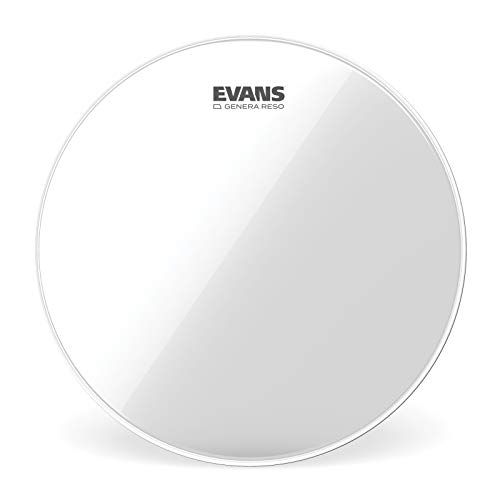
Evans Genera Resonant Drumhead 12 Inch | Evans Genera Resonant heads deliver open tone, clear sustain, balanced resonance and dependable tom performance.
For drummers who want to see how a different resonant line compares across the wider category, the guide Remo Resonant Drum Heads: How to Choose the Right Pair (2026) walks through the same decision points from a different brand’s perspective. If you are looking at a different tom size, 6 Best Drum Heads for Toms: Our Picks Compared for Every Drummer covers a broader range.
FAQ
Are Evans resonant drum heads good for beginners?
They can be. A resonant head that is designed for controlled overtones is forgiving in the sense that it does not ring out of control as easily as an unbalanced head. Beginners should still expect to spend time learning to tune both sides of the drum.
What size is the Evans TT12ECR?
The listing identifies it as a 12-inch head. Confirm the diameter against your tom before buying, because bearing-edge measurements can vary.
Should the resonant head be tuned higher or lower than the batter head?
Many drummers tune the resonant head slightly higher or lower depending on the sound they want. A small difference often gives the most useful balance of body and clarity, but there is no single rule that fits every drum.
Do resonant heads need to be replaced often?
Replacement intervals depend on playing volume, humidity and how often the head is tuned. Owners commonly replace resonant heads when they show dents, loss of tone or inability to hold tuning.
Can I use this head on a snare drum?
The listing identifies it as a tom head. Snare resonant heads are often different in thickness and tuning range, so check the intended use before fitting it to a snare.
Does this head require special tools to install?
No special tools are needed beyond a standard drum key. A pull-cord or tension gauge can help you keep the lugs even, but it is optional.
How do I know if a resonant head is too loose or too tight?
A head that is too loose tends to sound flabby and may buzz or wobble. A head that is too tight can sound choked, thin or overly bright. Tune in small increments and listen after each adjustment.
Final Verdict
The Evans TT12ECR EC Resonant drum head is a sensible choice for drummers who want a 12-inch resonant tom head with controlled overtones, clear sustain and dependable response. It rewards careful tuning and suits rock, pop and worship playing well. The main limitation is the thin published technical detail, so compare it against your sound goals and tuning habits before buying. If you want to check current listing details and availability, View on Amazon.
About Owen Palmer
Owen Palmer is part of our editorial team and reviews and edits our drums guides, checking product details against manufacturer specifications and owner feedback.
About the author
Owen Palmer writes reviews and buying guides for Drum Path.